
Ruth—Blessings: Ruth 2: 14-23; Matthew 5: 1-12
There is a very pronounced difference in the south between blessing somebody and blessing somebody out. The other day I was in court down south, and I learned this difference all over again. At the conclusion of my case there, I thanked the other attorney for her hard work on this second case with her. Both were rather difficult cases. She said, “Well, I’m sick of seeing you. Every time you come down here, it’s some awful, horrible case. Please don’t come back.” And since I have very little control over my mouth getting me in trouble, I responded, “Don’t worry, I’d rather have a root canal.” Sometimes life hands us a blessing, and sometimes life hands us a blessing out.
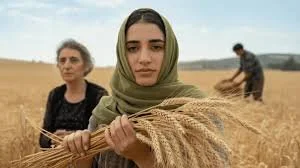
In today’s story of Ruth, we read a story of great blessings. In the customs of Ancient Israel, Boaz was obligated to leave some remnants in the field for Ruth to gather. However, here we see him going far and beyond to bless her. He provides her lunch, and he makes sure the workers allow extras for her to gather and retrieve in the fields, so that she would have an abundance of grain and barley. He was making sure she had more than just enough to get by. We can be certain at this point that she had been the subject of complaints both to her and about her. Boaz’s final command to his workers is, “Do not give her a hard time!”
This was the third time he had to warn them not to harass her and give her a hard time. The workers and possibly the town complained that Ruth, a Moabite, was receiving special favor. Boaz took a great risk in this because others could come and ask for more, as well as his reputation in the town could suffer. Ruth likely was treated poorly. The text always identifies her as “the Moabite” or “from Moab” singling out her difference. And throughout the text, she often refers to herself in derogatory terms for an outsider and foreigner.
But those who were unkind to Ruth and looked down on her did not understand her struggle. They saw someone getting a blessing, and they became jealous. They didn’t understand what she has been through. They didn’t endure the death of her husband, her brother-in-law, her father-in-law. They didn’t endure having to say goodbye to her sister and family forever. They didn’t have to endure coming to a place where she was treated roughly, threatened with assault, and looked down upon. They didn’t understand that the nicest thing she had received in years was a little extra grain and barley and a lunch of bread and sour wine. Ruth had suffered tremendously, and now folks were angry over her receiving some tiny little blessing in a life of misery. They didn’t even give her some credit for her faithfulness to Naomi and to God.
Naomi now realizes that Boaz is interested in a lot more than just being kind to Ruth. In these ancient times, the only way to redeem or re-take ownership of land when a man died was for a relative or part of the clan to marry the widow and redeem the family land within the family. Boaz was one who could do this. So, Naomi begins creating a plan to make this happen. Ruth was to be a blessing to Boaz by giving him the family he lacked. Boaz was going to be a blessing to Ruth by giving her a family and protecting her. Naomi was to receive a blessing because her family land and birthright would be redeemed if Boaz and Ruth got married. Yet remember, that in all of this, Ruth does not really have a choice. If she wants to survive, she has to marry whichever family redeemer is willing to do so. It’s works out well that it is a kind and loving man like Boaz.
Blessings aren’t really blessings if they come with strings or if received with no way out. Sometimes we label things blessings that aren’t so much a blessing. I remember years ago when someone I know got in a car accident and doctors found a heart issue as a result of the scans in the hospital. The heart issue could have killed him. His aunt said boldly to everyone, “This accident turned out to be a huge blessing because they found his heart issue and saved him.” But he was also paralyzed from the waist down, so I’m not sure he would call it that much of a blessing. Blessings, like the love of Jesus are not earned, not bartered, not a repayment, and do not come with a heavy cost. It’s something that brings joy or comfort simply from the love of the person blessing us.
How, then, can we be a blessing to others? Well, thankfully, Jesus preached a whole sermon on it, on a mount. To be a blessing in this world, we should lift up the poor in spirit, comfort those who mourn, reward the humble, help those who work for what is just and right, show mercy, live in faith and love with the pure of heart, work for peace, and stand with the persecuted. We should refrain from persecuting, mocking, and slighting those who follow God while still holding one another accountable for living wrongly instead of for God.
I think sometimes we read the Sermon on the Mount from too much of a distance. We read that “God blesses…” or in the olden terms, “blessed are the poor in spirt,” and so on. When we read this, we think God is going to sprinkle down the blessings like those little snow flurries I watched yesterday afternoon. Perhaps, though, we shouldn’t be so removed from this sermon of Jesus. When the text says, God blesses, it is often through us, the followers of Jesus, that those blessings come. Blessed are they who mourn. When someone is hurting and struggling, we bring a casserole and a visit. That is God blessing the mournful.
When we talk about our own faith and overcoming trials we show how the kingdom of God wins out to those who are poor in spirit or feel persecuted. When we forgive someone who wronged us, we show mercy. When we say no to those who would do what is wrong, we stand for justice. When we speak words of calm and gentleness we create peace. In all of this, God blesses through us. We begin with our faith in Jesus, who loves us, but if that was all we had to do, it would be a pamphlet, not a Bible. God blesses both in the miraculous and in the ordinary. And in the ordinary, we show up to love, to heal, to forgive, and to be a blessing, just like Jesus, casserole and cake in hand.
Years ago, this was understood. In 1909, Ira Wilson wrote a hymn about being a blessing. The chorus says this, “Make me a blessing, oh, make me a blessing. Out of my life may Jesus shine; make me a blessing, O Savior, I pray. Make me a blessing to someone today.” That hymn is just as important today as it was in 1909. Who needs us to be a blessing in this life, and in turn, who do we need to be a blessing to us?
Ruth was an unexpected blessing. Naomi expected a burden, hoping Ruth would go home to her family. Bethlehem expected just another Moabite, whom they were sick of and wanted to go away. Boaz expected one more impoverished beggar gleaning from the fields. But Ruth defied all of their expectations. She became a blessing to Naomi by becoming the way the family land could be redeemed. She became a blessing to Boaz by giving him the family he had likely given up on. And she became a blessing to the people of Bethlehem by showing what it meant to be faithful and how God could work through an unexpected person.
In life we may be blessed or we may be blessed out. At times we may be subjected to both. But as followers of Jesus, we are called to be a blessing in life just like Ruth was to Boaz, Naomi, and Bethlehem. May we live in humble ways that bless those around us who are in need. And may we also experience abundant blessings from the One who loves us, redeems us, and sustains us in life.
Worship Service Video https://www.facebook.com/fccmacon/videos/1392708902344821/