
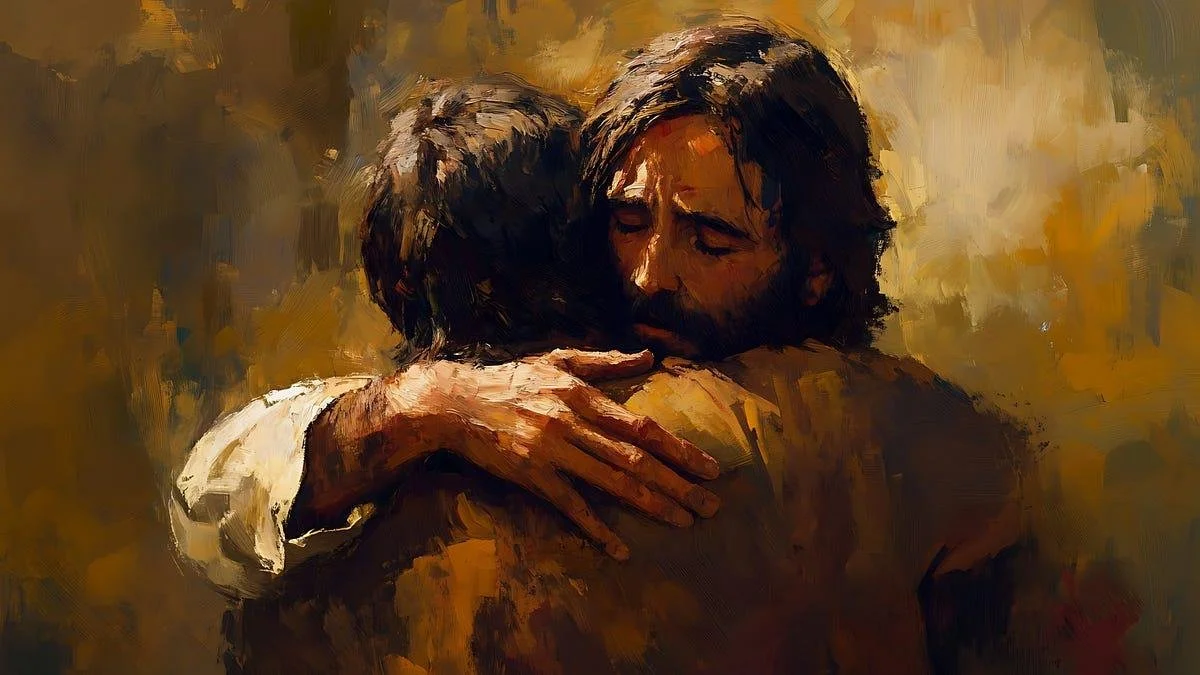



The Book of James: The Evils of Prejudice

The Evils of Prejudice: James 2: 1-13

In some way or another, we all wrestle with preferences and prejudices in our hearts and minds. From our neighborhoods, to our family demographics, from living isolation to a big community, to our family and social values, all will create in us some kind of preferences of prejudices. Those may be seen in whether we look to television shows and news which glorify the rich and famous. We can also look at who we struggle to talk to, who we cross the street to avoid. There are people that bother us because of how they look, what their cultural background is, who they are married to, their weight and appearance, or the struggles they’ve faced in life. Every person in life has some sort of preference or prejudice in their heart and mind. 

In the opening to James chapter two, we are told how to act and behave given these thoughts and beliefs which are socialized into us. But let’s start first with God’s view. In I Samuel 16:7, we are told this, “But the Lord said to Samuel, ‘Don’t judge by his appearance or height, for I have rejected him. The Lord doesn’t see things the way you see them. People judge by outward appearance, but the Lord looks at the heart.’” God, then, looks at the heart and now what can be seen. James gives us the example of a rich person in church. Don’t favor someone who appears wealthy and powerful over the poor in God’s house, a problem James struggled with in his own church. 

There are several reasons that we should do everything in our power and with God’s help to quell the favoritism in our minds and actions. First favoritism is unfaithful. The need to impress and show off is something valued by humanity and society, but it doesn’t speak to a depth of faith. You can have the nicest car, the best clothes, the most spectacular talents in the world, but God looks to the heart and not to these outward things. There is nothing you can bring to the table or that will impress God. God is looking for people faithful, willing, and who can be made into the image of Christ. Furthermore, Jesus often spoke of liberating the poor. In Luke 6:20, “God blesses you who are poor, for the kingdom of God is yours.” In other places, Jesus says the last shall be first. Faith teaches about making whole the broken, saving the sinner, and helping the least of these, not bolstering the already complacent and well off. 

Favoritism is also misdirected. James pointedly says in verse 6, “Isn’t it the rich who oppress you?” In the early days of the church, the rich classes harassed the Christians because there were so many from the poorer classes. They also used debtors prisons to make the early Christians suffer. Jesus even spoke to forgiving debts in the Parable of the Unforgiving Debtor in Matthew 18. We cannot change this emphasis on forgiving debts and helping those in need to a worship of wealth and power in our faith and in our society. That utterly misses the mark of what Jesus taught and preached. Instead we must make sure our faith lifts up, helps, and blesses those who are in need. There should be joy in an encounter with God’s people, not suffering and humiliation. 

Favoritism is unloving and unchristian. If we isolate or keep someone out because of how we feel or look upon them, we keep them from being part of God’s family of faith, but it also deprives us of learning from them and receiving their love in return. When Jesus said “love your neighbor,” he meant every neighbor, rich, poor, whatever and whoever they are in the same Christ-like way. We are all going to have some kind of learned prejudice in our lives, but Jesus extended the arms of grace to all people that all might know the love of God. In every human there is imperfection, which is why we need God in our lives. That is the reason we look to the heart and what God can do to change the heart to a more Christ-like way of living. 

So if our learned prejudices and preferences are the problem, James tells us that the solution is providing ourselves with accountability in our words and deeds as well as in our thoughts. First we must speak and act with fervor. James says in verse 12, “So whatever you say or whatever you do, remember that you will be judged by the law that sets you free.” If we live free from judgment and even the shadow of judgment we must encourage others to live free of judgement as well. Then in our speech and actions we must not judge. Perhaps the best way to phrase that is to live with the same hopes expectations we have. For instance, if we hope and expect to be welcome in heaven, then we must practice the same level of welcome on earth that God extends in heaven. We speak and act with further to bring grace and love into lives that are broken and hurting. 

And above all else, we must show mercy. In our worst days and times, God showed us mercy; therefore, we must be merciful. It is easy to be harsh. We tend to err towards angry accountability, holding feet to the fire, punishment, vengeance, just desserts, and you get what is coming to you. But then when we are in the hot seat we demand and plead for mercy. If we are unwilling to be merciful, then we should not expect mercy for ourselves. You can expect accountability and still show mercy. You can push and challenge others in a merciful way. We can overcome differences in and amongst ourselves if we remember to pause and speak first with mercy, for mercy will always, always triumph. 

I go back to that parable of the unforgiving debtor. in Matthew 18 A king called up his accounts to get all the debts up to date. One of the debtors who owed him a significant amount of money begged and pleaded for mercy on behalf of him and his family. The king was filled with mercy and forgave the debt of millions. But that same man who was just shown mercy, turned around and grabbed the person who owed him money by the throat demanding payment. This man also could not pay. The forgiven man showed no mercy. He threw the debtor who only owed him thousands in jail until the debt could be paid in full. The forgiven man was utterly unmerciful, and the angry king asked him this: “Shouldn’t you have mercy on your fellow [debtor] just as I had mercy on you?” In the end we are all one and the same—people who need the Holy One in their lives to bring love and grace. 

In all of our hearts, some form of prejudice and preference exists, and yet prejudice of any kind is a sin. Perhaps this is one of the most difficult areas of our growth in Christ—finding the kingdom way instead of “the way I know.” Instead of looking to what we see, what we hear, what we have been taught, we must look to the heart just as God does, and pray that each and every heart will be attuned to Christ. That is perhaps the only way to break the chains of prejudice that keep us from fully following Jesus’s way. Look to the heart of the person, speak and act with fervent love and grace. And remember that to all people we must be merciful, dealing first and foremost in love. For when we were poor and poor in spirit, God was rich in mercy to us, and so too, must we be to others. 

The Book of James: Listen and Do

Listen and Do: James 1: 19-25

A week or so ago, a friend emailed me a cartoon. It was two people sitting at a table having dinner. The man was talking and gesturing in a loud and grand way based on the the way he was drawn, and the woman was sitting at the table quietly giving him what I’ve always heard was one of those “if looks could kill, buddy,” kind of looks. The caption read, “Let me interrupt your training and expertise with my unwarranted, loud confidence.” I can identify was trying to talk about a point of criminal law, and I was interrupted by a very outspoken guy asking, “Well, how would you know. That sounds made up!” Routinely I get the pleasure of explaining that I’m a criminal lawyer with 10 years of experience. And I often get to add that just because you don’t like it, doesn’t make it any less the law. 

James talks about this problem. We have, in our modern society, utterly failed to listen. And even when we do listen, we do so only with the goal of retorting or spouting something back at the speaker. When we fail to listen, it affects all parts of our lives, but most poignantly our relationship with God because we fail to listen and do as God directs, either doing nothing at all or the opposite of what God directs. 

First, we must listen. There are five ways we are told to do this in the text in James. We must be quick to listen. It is important that we do this quickly and not reluctantly. Giving your time and attention to someone is a sign of respect and trust, but giving your time and attention to God is an expectation. After all, God is the creator, sustainer, and savior of our lives. To the One who is all those things, we should give our attention. We should do this not just to mull it over, to reply, to debate, or to run away like Jonah. We should listen quickly with the intent on truly hearing and processing the message. 

We must also be slow to speak. An old wise saying based loosely on Proverbs 17:28 reminds us “Better to be thought a fool than to open your mouth and remove all doubt.” Typically, the quote is attributed to Mark Twain, thought he may or may not have said it. Much of this desire to say something comes from a need within us to be right, and I believe that can become an idol in our lives. When you choose to show that you’re right or correct above all else, there is a cost. It can cost you a job if you have to be right to your employer. It can cost you a relationship if a person no longer wants to be around you because you’ve become an obnoxious know it all. From being a lawyer, I know that being right can win your argument, but it may make things rather lonely in your world of perfection. The better way often is to pause, to listen, and to think. Gentleness is sometimes more important than being right. 

We must also be slow to get angry. In our modern politics and society, anger is the default for all things. But the Bible is clear over and over that resentment is not a Christian characteristic. God calls us to be patient, kind, gentle, tender-hearted, and loving with those that anger and frustrate us. You may be able to yell someone into submission, but you can never shout them into redemption. I still believe that love and grace can change even the most angry and hardened heart. I still believe that the love of Christ can wash away bitterness and resentment. Therefore, be slow to anger. 

In order to listen we must also rid ourselves of the garbage in our lives. Do we bring in things that build our anger and resentment, that make us miserable and pull us away from God’s love and our obligation to be people reaching out the lost and wayward in the world? Or do we deal and bring into our lives thing that foster peace, happiness, joy, and Godliness? It’s a simple fact. If you eat junk food constantly, you will be come sick and unhealthy. The same is true spiritually. What you bring into your lives will determine your spiritual well-being, so bring in things that are Godly. Humbly accept what God would plant in your life. We may not always like God’s message, but we cannot refuse to listen to God just because the message is difficult. 

It reminds me of a pastor friend. He began to feel the call to go to a certain church, one that had great difficulty in the past. He was happy at his present church and ignored the heart tug from God, the open pathway there. Instead he said that it would take a burning bush before he would go. One day he stopped at a red-light. The person in front of him threw a used cigarette out of the car, and it hit a bush. The bush burst into huge flames shocking everybody. Later he learned that earlier the same day a gas can had fallen off of a truck dousing the bush in gasoline. It was his burning bush. We must listen to God. 

But we must also do what God says to us. If not we risk forgetting the message and the meaning, or not understanding it. Have you ever thought, “Well, I don’t need a list. I can remember these things at the grocery store?” Only, once you are standing in the middle of aisle three, you think, “Why did I come here, again?” The same is true if we fail to act on God’s messages. They will get lost, both in impact and action. God’s Word is meant to be active and a call to action. In the Great Commission, we are told to go OUT to heal, to teach, to save, and baptize. That requires action—to go! God’s word also calls us to be responsible. Preparing to listen, and being willing to listen to God is a choice we make, just like following what God says is also a choice we make. James tells us that faith implores us to listen to God and to do as God directs. It falls under that obedience part of our faith. And it requires us to be humble. 

One of the greatest things we can give up in this life is the desire to be right. Only One has the right answer to all of life, and that is God. We stumble around as best we can with our intellect, our experience, and some limited direction from God. And yet we have to be right all the time—it blocks us from hearing God, from listening to the wisdom from others, from being the clay that God desires to mold and work out into something beautiful, beloved, and crafted to be just like God, made in God’s image. Be still in life and in prayer to listen. God is still speaking to us, and the question is this: have we made room in our soul to hear it? 

The Book of James: Faith and Endurance

Faith and Endurance—James 1: 1-18

One of the things we tend to hear a lot from parents, teachers, and other authority figures is the phrase, “Oh will you grow up!?” or some version thereof. Perhaps it’s even been shouted at you or by you in the midst of heated argument, “Just grow up!” Now luckily, I never heard this much growing up. But then, the running joke in the family was that I didn’t hear this phrase because I was born a grumpy 60 year old man. The Book of James deals throughout with this idea or concept of maturity, of what it means to be the “mature Christian.” 

In talking about growth and maturity, we focus in on the first part of the first chapter which deals with faith and endurance. These two things are discussed in the context of dealing with the trials of life. Now Paul tended to finesse his New Testament letters a bit before getting into the deep water. You might hear a bit of a greeting and some “grace and peace” language that provides multiple verse of warm well-wishes. James, is about as subtle as a heart attack. He basically says, “Greetings,” then hits the reader with a punch square to the gut: consider it joy when trials come your way. 

James talks about God giving us strength through a trial when we let our endurance grow and be tested. Endurance is the key for James—our ability to lean on God for strength through the trials of life. Endurance means getting through the trial without compromising or wavering. If you talk to someone who has continued with a strong faith in Christ, you will find a common theme. In all the most difficult times of life, they endured, and they did so by relying on God to be with them. In times of trial we must run TO God not FROM God, and we must ask for wisdom. 

The two go hand in hand. You cannot endure a trial unless you go to God and ask for wisdom, and ask in faith. James is very blunt in saying if you come to God asking for wisdom, and you do so without faith or with a divided loyalty, you’ll end up with nothing. I am reading a book about a brilliant pianist who escaped the war in Syria as a refugee to Germany. It details the harrowing suffering of him and his family at the hands of the military. He is a Palestinian, and his family were refugees in Syria. What sticks out is that sense of endurance and wisdom to mold and meld to the circumstances for hope and for survival. While his faith is not Christianity, the same parallel can be seen: trials mild to severe must be faced with endurance, seeking wisdom, and fully relying on God’s help. 

But at the same time, we may face both trial and temptation in life. Now, interestingly, trial and temptation have the same Greek root, and to know the difference you use look at the context. Are you suffering through a trial that will test your faith, or are you being tempted away form God to something that seems enticing but is actually evil? The answer is the same. Verse 12 says, “God blesses those who patiently endure testing and temptation.” Both are found in the Lord’s prayer: lead us not into temptation, but deliver us from evil. 

We live in a time when both trials and temptations are rampant. Coronavirus is certainly a trial. But the animosities, the politics, the manipulation of faith all around us are also trials that add to our burden and stress in our modern times. Humanity’s sense of dread and worry has grown in recent years. The trials have grown around us both physically and mentally taking their toll. But we also face temptation in more ways and outlets than ever before. The internet has brought interconnectedness, but it has also brought us misinformation, a platform for hatred and evil, violence, immorality, and horrible things all at the click of a button.

The answer to these growing troubles is within us: to remember to seek God’s help and guidance to resist and endure the trials and temptations. Lead us not into temptation, but deliver us from evil. Navigating trials and temptations without God’s help will leave us broken and weary. It will damage our relationship with God and with loved ones around us to the point that we will be lost. Instead we should run to God, rely on God, there we will find our answers. We are told consider it joy when you find yourself in trials. We are told patiently endure when temptation comes your way. With the help of God’s love and might you will be carried through the trial, and you will overcome the temptation. 

Do not be tempted to let trials and temptation ruin your relationship with the Holy One who created you and loved you each and every day and each step of the way. James tells us, “So don’t be misled my dear brothers and sisters. Whatever is good and perfect is a gift coming down to us from God.” James reminds us that we are chosen by God. We are God’s prized possession. Remember that during trials and temptations. You are loved, and you are wanted. Even Christ had to endure struggles on the Earth. He was not spared trials or temptations. And yet Christ endured the trials and resisted temptation in the wilderness. 

One of the hardest things people face with faith is this expectation that if our God is all-powerful, then things should be made perfect—all should be fixed. Why do trials exist? Why is there temptation and trouble? I think James here gives us a hard answer but the best advice. The hard answer is that life may not be easy for us regardless if we have faith or not. Suffering, trials, and temptation will touch the followers of Christ just like it will touch those who do not. 

But here is the difference: when we follow Christ, we have One who is mighty enough to give us the strength to bear through and find peace and a quiet resolve. God will help us find a way to a mature faith response to trials and temptations: consider it all joy. So in the midst of trial and temptation be reminded that this too shall pass. But in the meantime when the way is dark and rough, remember that God will help you endure through as you ask for the wisdom to deal with life. And in the end, we are created by God, loved by God, and given strength by God every single day, for every single trial and temptation. So, lean on God’s love, and count it all joy.  

Easter 2020 Sermon

Don’t Be Afraid: Isaiah 43: 1-13; Matthew 28: 1-10

A friend said to me the other day, “Well, Will, I think the whole world is going to Hell in a hand basket.” He and I share a similar theology and outlook on life, so with a bit of a smirk, I replied, “Or maybe it’s just a wild ride around the block?” I’ve never liked or appreciated when churches teach faith through fear saying that all is in the proverbial hand basket, or when people live their lives filled with an unnecessary level of fear. It runs so hard against the message of hope and resurrection that Jesus taught and lived. Today we read in the gospel that after Jesus was raised from the dead, the first thing he said to his disciples was: “don’t be afraid.” 

More than ever on Easter we need to hear the message of a Savior filled with love, filled with grace, and filled with strength. Yes we are familiar with the Jesus who healed the sick, who taught powerful lessons to the crowds, who walked on water. But today, and especially in our current times, we need to remember the lesson of a Savior who lived and taught resurrection, of life everlasting, and of victory over all things here on earth. 

The resurrection of Christ teaches us that we should live without fear here on earth. Now that doesn’t mean living recklessly or dangerously, but instead we live knowing that at the end of our entire journey there is hope, there is resurrection. Many of these lessons on strength and grace in trial, of being resolute in troubling times I learned from folks here at FCC Macon who have since earned their reward. 

One that particularly touched me and has stayed with me was Barbara Wright. As she was moved into nursing and hospice care I spent some time with her.. She had an incredibly wicked sense of humor, and I’ll never forget her saying this, “I’m not really all that afraid of death. It’s the whole dying part that bothers me.” That stuck with me. Don’t be afraid, for in death, there is resurrection, there is hope. Don’t be afraid, when there is a rampant disease which brings fear to our lives, our God heals, but if not, we will have life everlasting through a God who has the power of resurrection. 

Don’t be afraid. That is one of the reasons I’ve never cared for the phrase that all is going to hell in a hand basket. It says to us that this world is not worth saving, that fundamentally things are wrong and our best bet is to live in fear of everything and everyone out there. And I don’t believe that. People do bad things. People make bad choices, but fundamentally, this earth is populated by children of God, some of whom have strong faith and belief, and some of whom have not found God yet and continue to squander their lives continually seeking what is wrong, following paths of fear, living unholy lives. They may even be the very ones waiting for us to show them of Christ’s saving love. 

Others too have taught me courage, and many of you as well. Lois Lantz was the perfect portrait of poised resolution even in the most humbling and trying of circumstances, even as her recall and understand failed, her grace and presence never left her. I could name so many others in this church that taught me, taught us, lessons of hope, of courage, of grace, who reminded us in life and death, “Don’t be afraid.” 

When you begin to look at the people here on the earth, and you look at each one, realizing that they, too, are a child of God, beloved by God, conceived in God’s image, it changes one’s outlook on life. We can remember that our God is a God who calls us to repentance on Good Friday, and gives us the hope of resurrection on Easter. And that same lesson of hope is given to the whole earth to hear. God’s message throughout the prophecy of Isaiah was for Israel to trust in God and not fear. Over and over in the story of Jesus’s resurrection we hear those words, “Don’t be afraid.” 

Jesus calls us out of those fears whether it is our fear that the world is just done and gone, whether it is our fear of sickness and suffering, whether it is our fear of dying, whether it is our fear of other people who are different in many ways or may be on the wrong pathways of life. Speak a word to them, encourage them. Never be afraid to remind someone who has strayed from God’s pathway that they are still made in the image of God, and they are still loved by God and by God’s church. Never hold back when you can make a difference through your Christ-given courage. You may have been called  and equipped for such a time as this. 

I pray that this Easter, when we are at home, maybe going a bit stir crazy, maybe worried about being sick, praying for family, friends and loved ones, that we remember the words to the hymn we will soon sing: “Because He lives, I can face tomorrow; because he lives all fear is gone; because I know he holds the future, and life is worth the living, just because he lives.” 

Here in Macon, Georgia, it’s a tradition that many churches have a cross in their front yard, and they change the cloth on the cross with the seasons to match the liturgical colors: white at Easter, purple in Lent and so on. Since we have to stay home from our churches for safety, I’ve noticed a new tradition this year. People are putting rough, plain crosses in their yards, on their apartment porches, or elsewhere dressing them up with lilies or palms or lilies, draped cloths and even lights, but all the crosses say the same thing: “Faith over fear.” 

And that is the message of Easter, plain and simple. Don’t be afraid. Go and tell everyone else, soon we will be reunited with Christ. It was a simple message Jesus gave to the women at his tomb. It may seem like the hand basket is ready and the world is loaded up inside, but into all that fear and chaos a risen Savior speaks words of hope and courage, “Don’t be afraid.” Let Christ’s resurrection remind you that the greatest power in our life is faith over fear, hope, and resurrection. Amen. 

Holy Week: Maundy Thursday Reflection

Today’s reflection was written and delivered by Kathy R. Smith.

John 13: 31-35

31 As soon as Judas left the room, Jesus said, “The time has come for the Son of Man[a] to enter into his glory, and God will be glorified because of him. 32 And since God receives glory because of the Son,[b] he will give his own glory to the Son, and he will do so at once. 33 Dear children, I will be with you only a little longer. And as I told the Jewish leaders, you will search for me, but you can’t come where I am going. 34 So now I am giving you a new commandment: Love each other. Just as I have loved you, you should love each other. 35 Your love for one another will prove to the world that you are my disciples.”

________________

This passage starts off with a very interesting statement, “As soon as Judas left the room…”.  Jesus waited until Judas was gone to instruct the disciples on upcoming events, how they should handle themselves, and what they should know about him.

Jesus wanted them to know that he loved them, and that it was necessary to leave them for a while.  He explained how he had to enter “his Glory,” which meant his coming death on the cross.  He explained how God would receive Glory from his son because of the sacrifice his Son will make.  He explains that they will search for him, but will not be able to find him.  All of these things, Jesus said to the disciples, AFTER Judas had left to commit his betrayal. 

Then, when he finished explaining to them how he would have to leave them, he ended with a powerful and challenging statement, “Love each other.  Just as I have loved you, you should love each other.  Your love for one another will prove to the world that you are my disciples.” What a beautiful parting statement from the Savior to the disciples and also to us thousands of years later.  “Love each other.”  It was the very reason, this love, that would lead him to the cross to save and heal us all. 

And again, he said none of this until “Judas left the room.” These wonderful directives that Jesus left his disciples were not heard by Judas because he had left the room.  Jesus knew that Judas had made his choice, and he knew his statements would have been lost on Judas. Judas had spiritually left Jesus long before he physically left the room.  

During this Easter season, let us try to follow Jesus’s call to love one another, showing compassion and understanding even when we don’t want to. And in those times we don’t want to follow this call - we ask Jesus to give us his heart so that we can show true and sincere love, not fake and counterfeit love that that we see so much of today.  Don’t miss out on God’s goodness, his love, his understanding, and his kindness because you, too, have left the room.

Let us pray: Loving God, teach us to love one another even as you have loved us. May we always be present and receptive as you teach us and guide us. In Christ we pray, Amen. 

Holy Week: Wednesday Gospel Reflection

John 13: 21-30

21 Now Jesus was deeply troubled, and he exclaimed, “I tell you the truth, one of you will betray me!” 22 The disciples looked at each other, wondering whom he could mean. 23 The disciple Jesus loved was sitting next to Jesus at the table. 24 Simon Peter motioned to him to ask, “Who’s he talking about?” 25 So that disciple leaned over to Jesus and asked, “Lord, who is it?” 26 Jesus responded, “It is the one to whom I give the bread I dip in the bowl.” And when he had dipped it, he gave it to Judas, son of Simon Iscariot. 27 When Judas had eaten the bread, Satan entered into him. Then Jesus told him, “Hurry and do what you’re going to do.” 28 None of the others at the table knew what Jesus meant. 29 Since Judas was their treasurer, some thought Jesus was telling him to go and pay for the food or to give some money to the poor. 30 So Judas left at once, going out into the night.

__________________

Betrayal in life can be terrible and devastating. Most of us will experience a betrayal at some point or another. It may be simple like a friend at school tattles on us. Or it may be gut wrenching such as an unfaithful end to a long marriage. Betrayal never comes from an enemy; instead, it always comes from those closest to us. That is because betrayal is predicted on trust. 

Jesus and the disciples had been together long enough to build that sense of trust. That is why they are stunned as Jesus announces one of them would betray him. They had come to see him as prophet, healer, teacher, and even as the Holy One. How could one of them who experienced such things betray Jesus? The thought defied their imagination. 

Even when Jesus gives them the sign, they seem unwilling to understand or believe that Judas was about to turn Jesus over to the authorities for crucifixion. They gave him the benefit of the doubt. That attitude shows us that the best tool of manipulation for a betrayer is to exploit the love and trust which overlooks faults, finds grace in acts which are wrong, and fails to hold accountable that which borders or crosses the line of evil. 

Love must be our strength and our mission as followers of Christ, but love brings with it accountability and responsibility. Love is willing to forgive, but love cannot overlook what is wrong. We must follow Jesus’s example of gently yet firmly holding Judas accountable, speaking the truth of his bad actions, and giving the option to do what is right. 

So what do we do when evil motives prevail? Here is a careful reminder: “There will be people in your life who will claim to love you but will turn their back on you when it is no longer convenient for them. Thankfully, there is one who promises, ‘I will never leave you nor forsake you.’” Betrayal will leave us feeling broken hearted, but God will never fail to deliver on a promise, and God will never forsake you. And there is where we find our hope and our assurance in life. 

Let us pray: Steadfast God, when others wound us, forsake us, and use us for their own selfish motives, remind us that there is a love which is pure and holy, a love found in you. Teach us to be gentle, yet firm in our faith in you, so that your hope and truth will reign. In Christ we pray. Amen. 

Holy Week: Tuesday Gospel Reading

John 12: 27-32

27 “Now my soul is deeply troubled. Should I pray, ‘Father, save me from this hour’? But this is the very reason I came! 28 Father, bring glory to your name. ”Then a voice spoke from heaven, saying, “I have already brought glory to my name, and I will do so again.” 29 When the crowd heard the voice, some thought it was thunder, while others declared an angel had spoken to him. 30 Then Jesus told them, “The voice was for your benefit, not mine. 31 The time for judging this world has come, when Satan, the ruler of this world, will be cast out. 32 And when I am lifted up from the earth, I will draw everyone to myself.”

_______________________

What does it mean to be “drawn?” I’ve heard descriptions of people as being “drawn to trouble” or even “drawn to drama.” As the evening winds down, and it begins to get dark, I am drawn to my bed. If you look for a dictionary definition, you would see the phrase: to be gently pulled or guided in a certain direction. 

Here, Jesus is speaking to his followers, and they hear a voice from heaven. Some say it is angels speaking, and some say it is thunder. But what Jesus says next is the heart of this reading, “And when I am lifted up from the earth, I will draw everyone unto myself.” A pastor I follow and listen to, Michael Piazza, said in his Palm Sunday sermon, that if we celebrate Palm Sunday, then go straight to Easter, we miss the cross. 

His exact quote was, “Palm Sunday without Good Friday is a lie, and Easter without Good Friday is an empty platitude that doesn’t ring true.” That hit home. If we are to be drawn to Christ, we have to be drawn to every aspect: the celebration, the cross, the pain and suffering, the call to love the least of these and those in the margins of society. We can’t embrace part of Jesus without embracing the whole, even if it makes us uncomfortable. 

But the good news is that we will be changed forever by the embrace. Even as Jesus was lifted up on the cross, he drew all of us unto himself. It reminds me of the hymn, “Draw me nearer, nearer, nearer blessed Lord, to they precious bleeding side.” I pray we follow Christ all the way, not just in the easiest of moments and lessons. 

Let us pray. Holy One, draw us closer to you that we may be reminded of your love and mercy. May we be prepared to follow you wherever you lead. In Christ, Amen. 

Holy Week: Monday Gospel Reflection

John 12: 1-8

12 Six days before the Passover celebration began, Jesus arrived in Bethany, the home of Lazarus—the man he had raised from the dead. A dinner was prepared in Jesus’ honor. Martha served, and Lazarus was among those who ate[a] with him. Then Mary took a twelve-ounce jar of expensive perfume made from essence of nard, and she anointed Jesus’ feet with it, wiping his feet with her hair. The house was filled with the fragrance. But Judas Iscariot, the disciple who would soon betray him, said, “That perfume was worth a year’s wages. It should have been sold and the money given to the poor.” Not that he cared for the poor—he was a thief, and since he was in charge of the disciples’ money, he often stole some for himself. Jesus replied, “Leave her alone. She did this in preparation for my burial. You will always have the poor among you, but you will not always have me.”

****

This makes me think of the quote by Martin Luther King, Jr., “The time is always right to do what is right.” In our lives, we have choice. We can choose to do what is right, with God’s help. Lazarus did what was right—he fed and provided great hospitality to Jesus and his disciples. Martha did what was right. She used her skills to cook, to feed, and to serve Jesus and his followers. Mary did what was right. She wasn’t quite the worker bee that Martha was, so she honored Jesus with a powerful gift and her love of him as the Holy One. With God’s help, they all chose what was right. 

Judas, however, seems to have never chosen what was right. He was a thief, a manipulator, and a betrayer. He stole from the money the disciples had. He tried to manipulate more money out of Mary and Lazarus’ house. And he betrayed Jesus to the authorities because of his greed. I don’t think Judas was inherently some arch villain of the Bible. He was a man who was selfish and greedy, and didn’t care who he had to sell out to get what he wanted. 

There are those in life who fit both categories: who choose what is right and who seem to be consumed by selfishness, greed, and self importance to the point that the miss the whole point of Christ’s teaching. You and I have a similar choice. We can let God help us do what is right, or we can continue to turn a blind eye to the call of the Savior. Here’s a little guidance. The time is always right to do what is right. 

Let us pray: Holy One, help us to break down our idols and those things that draw our attention away from you. Let us be guided and yielded to do what is right, and to follow your wise and holy leadership. In Christ, Amen.

Into Your Hands, I Commend My Spirit

Into Your Hands I Commend My Spirit: Luke 19: 28-40; Luke 23: 44-49

I don’t think many of us understand what it’s like to live through a time when churches cannot meet, when we have to stay home, and when we must experience the holiest of church days in our homes unable to leave because of and illness we don’t fully understand or know how to fight. 

As Christians we’ve been privileged to be able to congregate and pray and meet whenever we wanted to do so here in the United States without fear or worry that this right would be taken away from us. If we ever thought that right may be taken from us, perhaps we thought it would be through force, or politics, or even foes rising against us. But nobody would expect us to be sheltered away from our churches and places of worship for our own safety. That’s something we struggle to understand and accept. 

I believe, though, we can find comfort in the story of Palm Sunday and the final words of Christ from the cross. The story of Jesus’s journey into Jerusalem on what we know as Palm Sunday is often called the “triumphant entry.” Jesus rides on a lowly donkey through the streets to a hero’s welcome. He is praised and celebrated, honored and glorified by the people. They go so far as to say “Blessed is the King who comes in the name of the Lord,” a statement which would have seemed like blasphemy to the religious leaders of Jesus’ time. 

The people of Bethany and Bethphage loved Jesus. That had seen him tech and heal, and even bring Lazarus back to life. It was four and a half short miles into the city of Jerusalem from the Mount of Olives and these two cities. And in four miles he was met with an ominous warning: the Pharisees complaining about his followers offering hosannas and praise. Jesus rode into the city knowing it would be the end of his mortal life. The crowds in Jerusalem would cry out for him to be crucified, and the crowds in Bethany and Bethphage who had only recently shouted praises would silently say nothing in his defense. 

Four miles and five days changed “Hosannah in the highest, blessed is he who comes in the name of the Lord,” to “Crucify him.” And still Jesus rode on through the crowed likely with fear and uncertainty, knowing that pain and suffering awaited him in Jerusalem. He would experience physical suffering, his friends an followers abandoning him, being alone, falsely accused, and ultimately killed by a corrupt state working in tandem with religious frauds and zealots. 

But the answer to the suffering comes in Jesus’s last words on the cross: “Father, I entrust my spirit into your hands.” There was one place where Jesus could find all truth, all real holiness, and the true light of life: in the hands of God. Right before the end, the darkest point where death was imminent, Jesus tells us where that glimmer of hope is found: in the hands of God. Jesus entrusts himself in his final moments to the Father’s love and mercy, and finds his rest there. 

In our tough times this can be a lesson for us. If we find ourselves lonely and bored, fatigued at the lack of human touch, interact, and presence, let us commit ourselves into the hands of God. If we are worried about becoming ill of friends and loved ones getting sick, let us commit ourselves into the hands of God. Many folks have wondered why the church seems to have no answer for why this is happening, or what can be done. But I think the answer is right here: Jesus rode on through the cheers in Bethany and Bethphage, through the questions of the religious leaders, and ultimately to his death. It wasn’t about being right and fair. 

Instead it was about us—healing us, saving us, and restoring us. Even our own Savior had to suffer and endure struggles in this life, but ultimate goal was to save, heal, and help. Our mission is the same. In times of crisis, the church can’t sit back and contemplate why this is happening, how we explain it, or what theology makes this okay. Sometimes the answer is simply life is going to hurt. But in those times we can do like Jesus and entrust ourselves into God’s hands. Don’t let trouble run you away from God, instead let it push you closer to God who will strengthen you for the journey, just as Jesus was strengthened for his. 

We, too, have a mission to save, heal, and help. There are people out of work, without food, fearful and losing what little hope they may have had. This is the time we can truly show what it means to follow Christ. We can provide Kroger cards to feed those in need, send help to the food pantry, sew masks if able for the medical professionals, We can show that Christ is still very much alive in us and in our communities and houses of worship. Don’t let the struggle demoralize your faith. Let the present struggle inspire you to ride on through just like Jesus showing God’s love and what the church can really do to help, heal and restore. We have an opportunity at this point to make faith come alive and show that faith can still make a difference both spiritually and in this life. So may we rise to the challenge and ride on in hope and glory just as Jesus did. Amen.

It Is Finished

“It Is Finished” John 19: 28-34

“It is finished,” said Jesus. Typically, when we hear that word, “finished,” it means the end of something. For instance, when you’re done eating, you say, “I’m finished,” or “I’m done.” We think of being finished when we have completed something, such as finishing all our chores for the day. Or it can even express frustration. I have heard my mother say a couple times, “That’s it, I’m done with this.” So when we think of that word “finished” it usually means to us the end of something. 

And in fact, when Jesus says, “It is finished,” it means the end—the final word. It was the end of Jesus’s mission on earth. What has started as the birth of a holy child ended here on the cross. He had healed, he had taught, and he had created new ways of living and understanding faith and truth. Jesus had pleaded in the garden that this suffering would be removed from him, but in the end, he understood the mission of saving and redeeming humankind. It was the end of Jesus’s mission, what he came to do on earth. 

But this was also an end for us—an end to our searching and separation from God and our human failure, or as I grew up hearing, the “old sinful self.” At the birth of Christ way back at Christmas, which at this point seems to be 3 or 4 years ago, we sing in a hymn, “God and sinner reconciled.” This is where we see that happen—where Christ gives us life and joins with us in our own lives. 

In our modern lesson, we hear those words: I was spring cleaning, and God hadn’t found me still, so my faith sat in the attic. One year later, God teased with silence and created a period of waiting and silence. We all live in this pattern sometimes—of waiting, of uncertainty, of leaving our faith dusty and packed away in the attic because it feels like something is missing. We especially feel it right now. Some of us are self-isolated. Some of us are quarantined, and some of us are in cities with lockdowns like we’ve never seen before. It’s a holding pattern, a time of uncertainty and silence. 

But our faith does not have to live in the same pattern: for Christ said “It is finished,” and all was complete—God and sinners reconciled. The hymn “Great Is Thy Faithfulness” reminds us, of those powerful words of promise, “Thine own dear presence to cheer and to guide…strength for today and bright hope for tomorrow.” Even when our faith feels like it’s dusty in the attic, or we are waiting on a sign or a word, God’s presence is still there and can give us strength for today and bright hope for tomorrow. Christ has said, “It is finished,” and we must have faith in that promise. 

But when Jesus said, “It is finished,” it wasn’t just the end, or coming to a conclusion. It was a beginning as well. It was the beginning of a relationship, of God with us. I think that idea of God with us is so beautiful. It’s much like these two weeks I’ve been working from home. My cat, Lilly, has always wanted me to be around more. But now that I am, she’s not really sure what to do with it. Some moments she naps close by. Sometimes I get bitten and batted with a paw if I step out of line. But then there are those times when I’m frustrated or annoyed that she comes up, plops herself right in my arms or lap and starts purring and dozing off. It’s a reminder of a presence that loves and appreciates me. 

God with us. The cross was intended to be the end of this radical one, Jesus, of this strange set of followers he had. But the cross was not only the end, for it signaled the beginning as well: an end to our separation from God and the beginning our our ability to step out in faith—God with us. So, in these trying times, may we treat one another gently, love one another unconditionally even as God has loved us. As our modern lesson reminds us, God exists in the between, before, and after. God love is like a water cycle, from the heights of the heavens to the reflections on earth that show us God, too, lives in us. It is finished, but also, it is just the beginning. Amen.